Nirantar: World's First Hindi Blogzine
Nirantar.org is the world's first Hindi blogzine — a pioneering community-driven Hindi web magazine founded in 2005, blending blogging, professional writing, and citizen journalism into a single collaborative platform.
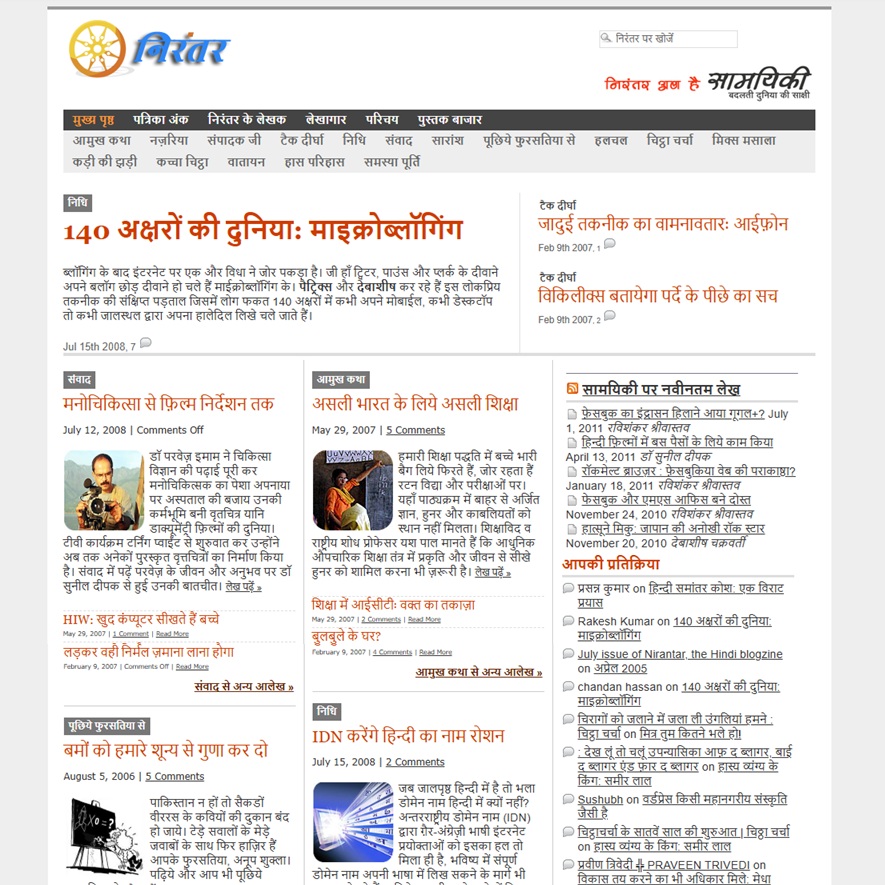
Nirantar (निरंतर, meaning continuous or unceasing) is a pioneering Hindi blogzine — widely regarded as the world’s first Hindi blogzine — founded in March 2005 by a group of Hindi bloggers who believed in the power of community and collaborative writing. The name reflects the publication’s philosophy: a continuous, unbroken commitment to quality Hindi digital content.
What made Nirantar unique was not merely that it was run by non-professional publishers, but that it gave readers the ability to comment instantly on published articles — making it not just a zine, but a blogzine: a fusion of the blog and the magazine that embodied the spirit of Web 2.0 before that term became ubiquitous.
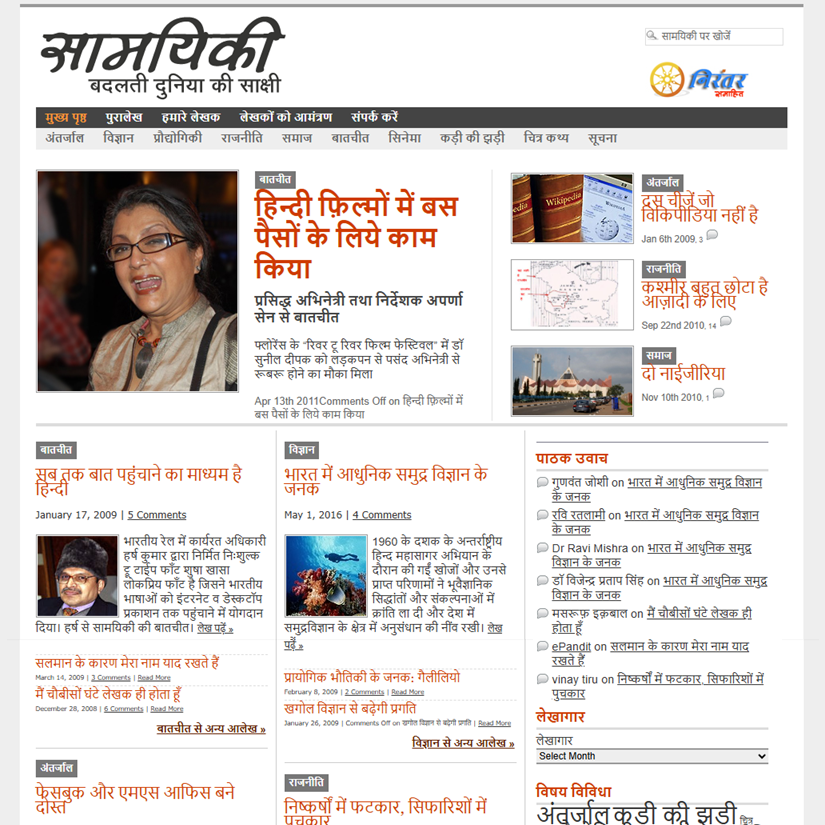
Nirantar was later reborn as Samayiki, which continues to publish to this day.
The Idea: Where Blogging Meets Journalism
In 2005, most Hindi bloggers wrote to share personal opinions. Reportage and investigative writing were nearly absent from the Hindi blogosphere. Nirantar set out to change that — to bring the rigour of journalism to the openness of blogging, and to use the internet’s interactivity to make readers co-creators rather than passive consumers.
The publication aimed to reflect the collective wisdom of its Hindi-speaking readership — not just the editorial board’s views, but a genuine synthesis of community opinion shaped before and after each article’s publication. To this end, a Nirantar Mitra (Friends of Nirantar) community group was established to involve readers in the editorial process itself.
Publication History
First run (March–August 2005): Nirantar published six editions before a hiatus due to time constraints on the part of its volunteer editors.
Revival (August 2006 onwards): Nirantar returned with a more mature editorial identity — more serious in tone, broader in scope, and with a strengthened core team. Further editions appeared in October 2006, December 2006, February 2007, and July 2008.
Between March 2005 and July 2008 we published 11 editions. Nirantar was later merged to Samayiki which started publishing in a pure blog format rather than a magazine format.
In its revived form, Nirantar aimed to become India’s first true community magazine — one where reader participation was visible not just in comments, but in the shaping of each story. Every article aspired to be a distillation of the internet’s Hindi-reading community’s collective intelligence.
The Editorial Vision
Each edition of Nirantar aimed to:
- Cover social, economic, and political dimensions of a globalising India
- Speak plainly and honestly — not in bookish language, but in the voice of its readers and editors
- Use Hindi that Hindi-speakers would appreciate, without alienating newcomers to the language
- Strike a balance between traditional and modern communication styles
Topics covered ranged from technology, science, and the internet, to literature, cinema, urbanisation, environment, and Kashmir — reflecting the breadth of the Hindi blogosphere it sought to represent.
The Editorial Team
One of Nirantar’s defining characteristics was its distributed, ideologically diverse team drawn from across the world. Editors and contributors held varying viewpoints, yet collaborated on a single publication — a rare feat for any community-run platform.
- Honorary Editor-in-Chief: Anup Shukla (popular blogger “Fursatiya” and an acclaimed satirsit and author)
- Core team (from August 2006): Dr. Sunil Deepak, eSwaami, Pratyaksha, Alok Kumar
- Founding team: Late Ravishankar Srivastava, Raman Kaul, Pankaj Narula, Shashi Singh, Atul Arora, and Debashish Chakrabarty
Logo & Visual Identity
 Nirantar’s logo was designed pro bono by Gurgaon-based graphic designer and photographer Bhavna Bahri. The logo depicts the chariot wheel (rathchakra) inspired by the Sun Temple at Konark, a symbol of perpetual motion and continuity, directly embodying the meaning of the name Nirantar.
Bhavna incorporated a glass effect on the wheel in keeping with the Web 2.0 aesthetic of the time, and used vibrant yellows and oranges to convey energy and vitality. The design succeeded in making Nirantar’s Indian identity visually unmistakable.
Notable Experiments
Buno Kahani — Collaborative Storytelling
Before Nirantar’s revival, Debashish ran Buno Kahani (Weave a Story) — a multi-author collaborative fiction experiment in the Hindi blogosphere. One blogger would begin a story; another would continue it, with no prior discussion of plot or length. The resulting suspense and unpredictability made it both entertaining and genuinely challenging for its contributors.
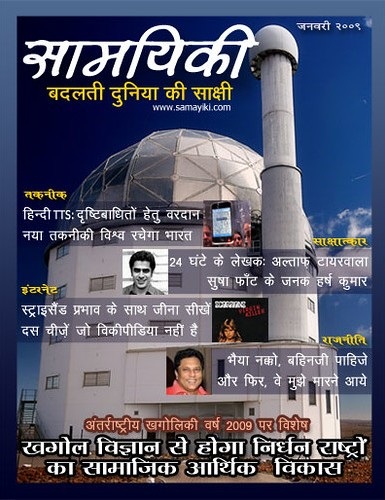
Print Edition: Buno Kahani is now available in Print and can be baught in India (via Pothi.com) and at Amazon worldwide.
Buy the Print EditionLaal Pari — The World’s First Interactive Hindi Story
In its revived form, Nirantar introduced what is believed to be the world’s first interactive Hindi story — a new column where popular blogger Pratyaksha wrote Laal Pari (The Red Fairy). At the end of each episode, Pratyaksha asked readers to vote on which direction the story should take next. The majority vote determined the plot of the following episode — making readers genuine co-authors of the narrative.
Notable Interviews
Dr. Sugata Mitra: Hole in the Wall (2007)

Interview with NIIT’s Dr. Sugata Mitra on the landmark “Hole in the Wall” experiment — which proved that children could teach themselves to use computers without formal instruction. One of Nirantar’s most-read articles. Read →
Sundarlal Bahuguna: Chipko Movement (2007)
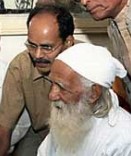
Environmentalist and Chipko Movement pioneer Sundarlal Bahuguna in conversation with Ravishankar Srivastava on ecology, dams, and the future of India’s natural resources. Read →
Maitreyi Pushpa: Hindi Novelist (2006)

A wide-ranging interview with one of contemporary Hindi literature’s most celebrated female voices — covering her writing, her relationship with editor Rajendra Yadav, and the controversies that made her a defining figure in modern Hindi fiction. Read →
Dr. Parvez Imam: Psychiatrist turned Documentary Filmmaker (2008)
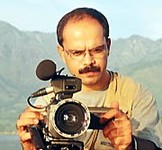
Dr. Sunil Deepak in conversation with Dr. Parvez Imam — who left psychiatry to create award-winning documentary films, including work for the TV programme Turning Point. A rare profile of an unconventional creative career. Read →
Notable Articles
Technology
The World in 140 Characters: Microblogging (2008)

One of the earliest Hindi-language explainers on Twitter and microblogging — published in July 2008 when Twitter was barely two years old. Co-authored by Debashish Chakrabarty and Patrix. Nirantar’s most-commented article with 7 reader comments. Read →
IDN: Hindi Domain Names on the Horizon (2008)

A prescient 2008 article explaining Internationalized Domain Names (IDN) — the technology that would eventually allow websites to have fully Hindi URLs. Translated and adapted by Raman Kaul. Read →
Language
Hindi Samantar Kosh: A Monumental Effort (2006)
A deep dive into the Hindi Samantar Kosh — a thesaurus of over 1.7 lakh words compiled by Arvindar Singh over 30 years, described as one of the greatest contributions to the Hindi language in the 20th century. Nirantar’s most-commented article (8 comments). Read →
Society
The Town That Burns: Centralia (2006)
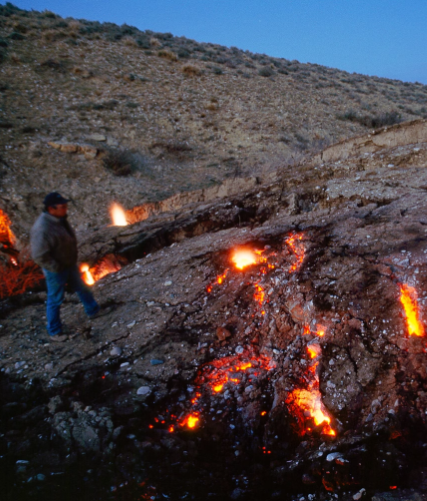
Cover story on Centralia, Pennsylvania — a town abandoned after an underground coal mine fire that has burned continuously since 1962. A striking example of Nirantar’s taste for unusual, deeply researched international stories told in Hindi. Read →
Real Education for Real India (2007)
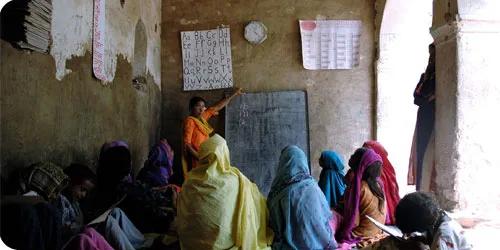
Cover story on India’s education crisis — examining the gap between the country’s formal education system and the needs of the majority of its citizens, drawing on the Yashpal Committee’s findings. Read →
The Indian Property Bubble (2006)

A prescient 2006 analysis of India’s real estate market — asking whether the country’s property boom was a sustainable trend or a speculative bubble waiting to burst. Published two years before the global financial crisis. Read →